
Signal 001
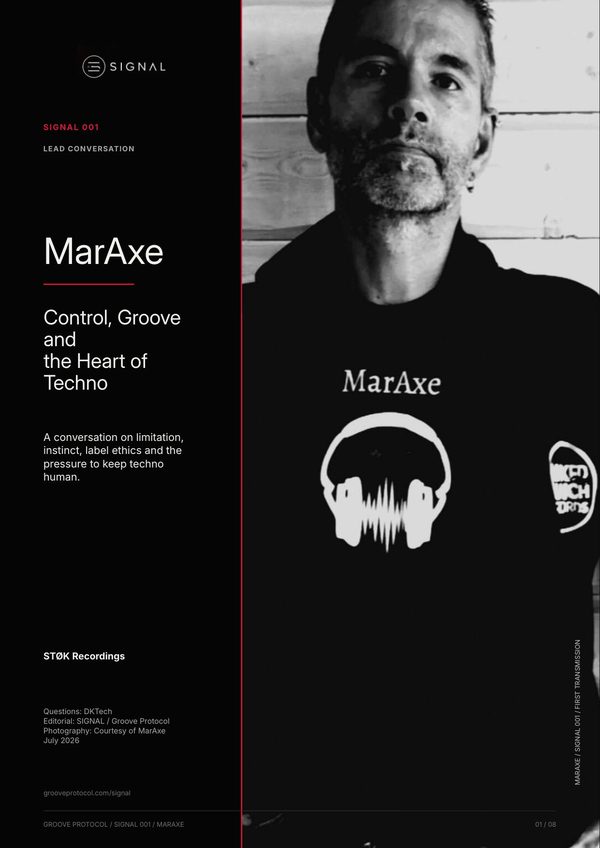
MarAxe Control, Groove and the Heart of Techno
A conversation on limitation, instinct, label ethics and the pressure to keep techno human.
Signal 001
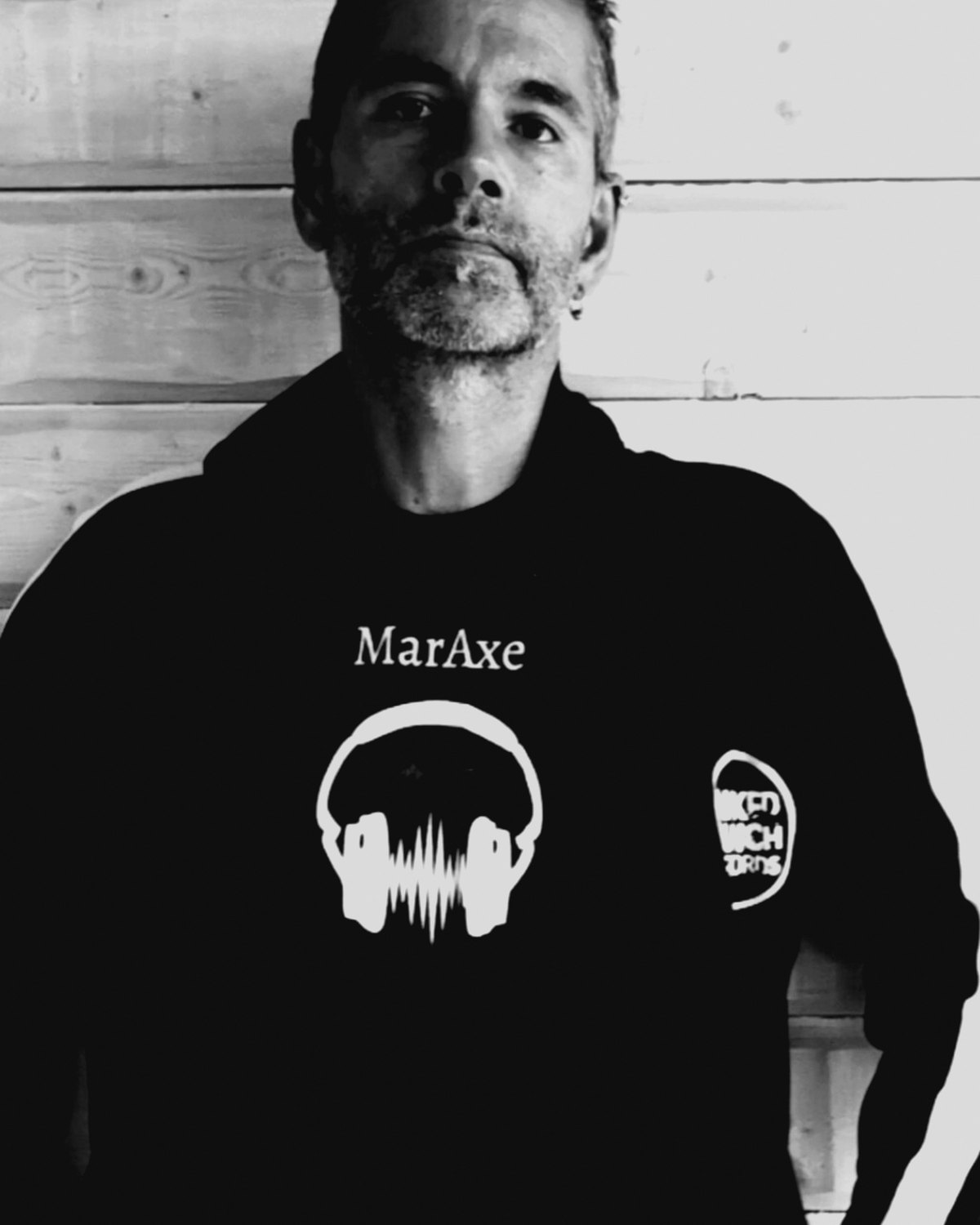
MarAxe works from limitation rather than excess. Fewer tools, a repeatable studio process and an instinctive focus on groove have produced a recognisable harder, hypnotic language. The same philosophy extends to STØK Recordings: a deliberately broad label built around experimentation, classic hard techno and hardgroove, and practical support for producers who need an extra push.
MarAxe is the central SIGNAL 001 conversation: not a profile built from hype, but an interview about control, craft and the ethics surrounding techno culture.
01
A blueprint built through limitation.
With the amount of music you have released, the real question is not productivity, but control. How do you maintain a clear sonic identity without the output becoming just volume?
I guess I have evolved over the years. All those hours in the studio have given me a workflow that I feel comfortable with, and I do not overthink things the way I did many years ago. Nowadays, I trust my instincts more.
I also avoid having too many plugins or too much hardware. Too much stuff crowds everything for me, so less is more. It makes me more productive, but it also forces me to push the limits of what I already have.
I have adjusted to that over time and developed what you might call a blueprint, or a formula that has become my sound. Inspiration can come from a particular sound or from life in general. By the time I start working, I usually already know what I want to do. I just create what is in my head and let my feelings drive the process.
I trust my instincts more.
ProcessLimit the tools. Trust the instinct. Push the system you already know.
02
Groove is the common language.
Your sound sits between hard techno impact and groove-driven functionality. Do you see those as two separate approaches, or as parts of the same system when you are building a track?
Sometimes I do, and sometimes I do not. I try not to think about genres when I produce. I just produce.
If I am doing a remix, though, I always try to make something that fits the label's profile or the character of the artist's original track. I would never make a hard techno remix if something more hypnotic were expected.
In a way, I have two outlets. One is harder, while the other is more hypnotic and groovy. When those two sides come together, you get the somewhat harder hypnotic style that I am known for.
Whatever style I am working in, I always begin with the groove and build from there. The process is basically the same. I am also strongly influenced by the techno we had 20 or 25 years ago, so I think I unconsciously create things that take me back to that era.
I always begin with the groove and build from there.
03
A track should outlive the moment.
A lot of modern techno is built around an immediate reaction. Your tracks often feel more structured and sustained. What separates a track that works for one moment from one that can hold a floor over time?
I like it when a track builds towards something, and it is important for me to have some kind of structure. I try to avoid overused sounds. If I use something well known, I try to add something to it so it becomes a little more unique.
In general, I try to follow my own path. If a track reaches number one on Beatport's hard techno chart, after a while you are going to hear a lot of tracks that are heavily inspired by that number-one track. I do not think that is the blueprint to follow if you want to have something under your belt that will hold up over time.
Build an identity, do not follow trends, and have faith in the process. Most importantly, have patience and have fun doing it.
Build an identity. Do not follow trends.
Structure gives a track somewhere to go. Identity gives it a reason to remain.
04
Three ears, one label instinct.
STØK Recordings has developed a distinct identity. When you listen to demos, what tells you that something belongs on STØK, and what makes you reject it? The name itself also suggests a certain energy. What does STØK represent to you?
When I listen to a demo, I listen to bits and pieces of the tracks. I listen with three ears: the two on my head and the one in my heart. If all three react, I know I have found something.
A proper presentation from the artist is also very important. From time to time, I receive demos with no real introduction, just a private SoundCloud link. Sometimes the track is not even exclusive because it has already been sent around to many other people. It may also be in a completely different genre.
When that happens, it kind of pisses me off. It shows that someone has not done their homework and does not really respect or care about the label. I also receive demos that need an extra push before I can release them. Whenever I can, and I always try to, I give feedback.
As for the label's name, STØK means 'messy'. Some labels have a very distinct sound and stay strictly within that lane. I want STØK to have a broader sound and to experiment, whether that is within hypnotic techno or the more traditional hard techno side.
From time to time, DJs reach out and say they are grateful to have found a label releasing the more classic hard techno and hardgroove sound they are looking for and playing. It is kind of difficult to find nowadays, so I want to do my part.
The label is also a way for me to help others and give new producers a platform when they need that extra push. People opened doors for me too, so in a way, I am trying to give something back and pay it forward.
I listen with three ears: the two on my head and the one in my heart.
05
The scene is also how people treat each other.
If you strip everything back, beyond trends, BPM and changes in production, what should techno never lose?
Its authenticity. Actual skill and talent. People with knowledge, and honest people who treat others with love and respect. Techno should never lose its heart and soul. We are the people who bring those things into the scene.
A few years ago, someone I thought was a friend in the business turned out to be narcissistic and very dishonest. That person seemed to be involved only for the attention it gave. As soon as they had enough to eat, so to speak, they moved on to other things and are probably still using people.
I despise people who use others for their own gain. That is not what the scene needs. I feel bad for every talented producer and DJ who is being used or pushed aside because of someone's ego, or because they do not have enough 'influencer points' on social media.
There is so much happening today that affects the scene in different ways, both positively and negatively. AI, social media and everything else surrounding us. Thankfully, there are still many of us trying our best to keep the core alive. Who knows? Maybe one day things will calm down, and we will all be able to share the space completely equally.
Techno should never lose its heart and soul.
Signal 001
Identity is the pressure point.
MarAxe's position is consistent from studio practice to label ethics. Identity is built through restraint, repetition and trust in the process. But the final measure is not only sonic. For him, techno remains credible when skill, honesty and respect survive alongside pressure, speed and visibility.
Build an identity. Do not follow trends. Have faith in the process.
Related release
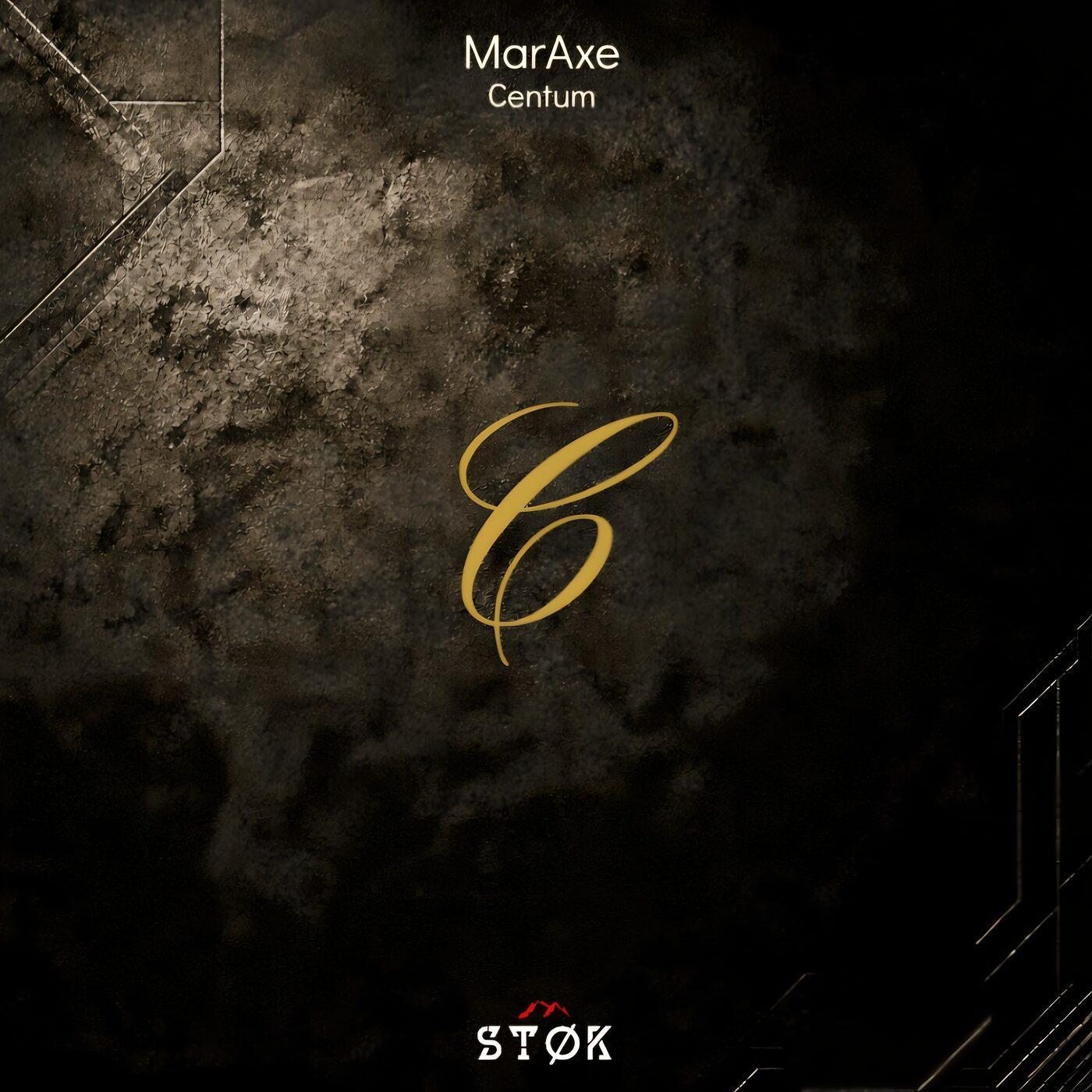
MarAxe - Centum
- Label
- STØK Recordings
- Catalogue
- SR100
- Milestone
- STØK Recordings 100th release
- Tracks
- Halls of Amenti - Centum Edit, Shell Shock - Centum Edit, Taurus - Centum Edit
- Beatport
- 17 July 2026