

SIGNAL VOICESAUTHOR'S PIECE
DKTech My music exists. But does it exist in the system that is supposed to protect my rights?
A system that manages authors' rights must be able to show how it does it. Now that is also written in a decision of the state regulator.

Signal
There is something strange about the moment you realise your music has travelled further than you expected, while the system responsible for protecting your copyright may not even know where it ended up.
I am Dino Egredžija, a music producer and DJ known as DKTech. Electronic music is how I express myself, it is my professional path, and it is the field I have been investing my work, my time and my own money in for years.
I never expected collective rights management to be simple. I only expected what I consider basic: a clear and verifiable answer to the question of what happens to my works when someone uses them in public.
I did not expect that question to turn into months of research, dozens of messages, a meeting at HDS ZAMP, a formal complaint and a petition to the state regulator. Even less did I expect that 121 days after my first detailed written request, the Croatian State Intellectual Property Office would issue a decision that concerns not only me, but every author whose music is played in clubs.
And that is exactly what happened.
01
It started with a simple question
In September 2025 I began the process of joining the Croatian Composers' Society (HDS) and my communication with its copyright service, HDS ZAMP. I sent forms, registered works, delivered music files and tried to keep my catalogue properly on record.
In November of the same year I got access to the Moj ZAMP portal.
Meanwhile my music was not standing still. I released productions, worked with other authors, played gigs and followed where my tracks were turning up. Through external music monitoring services I had data on hundreds of radio detections on stations in different countries. At one point my overview covered 377 logged broadcasts on 26 stations.
A detection by a private service is not the same as an officially confirmed use that automatically creates a right to payment. I learned that along the way. But if my music leaves a trace with a specific date, station and title, it is reasonable to expect that someone can explain whether that use was recorded, whether it can be checked, and under what conditions it enters the royalty calculation.
Instead of a clear picture, the portal did not show the uses and statements I expected.
I started asking questions. And every answer opened new ones.
02
When one track disappears inside a DJ set
One example caught my attention in particular: my work The Books of Kings and its appearance on Radio Split, in the show Jezgra. The monitoring data showed a detection on 7 November 2025.
The problem was bigger than one track. That set contained roughly 14 to 15 of my own compositions, and the external recognition detected only one.
A representative of Radio Split explained to me that tracks inside a continuous DJ mix are not processed the same way as individually broadcast songs. That opened a much more important question for me: how does the system recognise an author's work in a format whose defining feature is continuous mixing?
DJ culture does not work like a classic radio show where songs play one after another, each with a clear start and end. Tracks overlap, are shaped in real time and become part of a whole. That does not mean their authors have disappeared.
I am not claiming that every one of my detections had to end in a payment. I am saying we need to know how the system handles uses that were not properly recognised.
03
The club scene and the question that changed the whole case
The turning point came when I started looking into what happens to royalties collected from nightclubs.
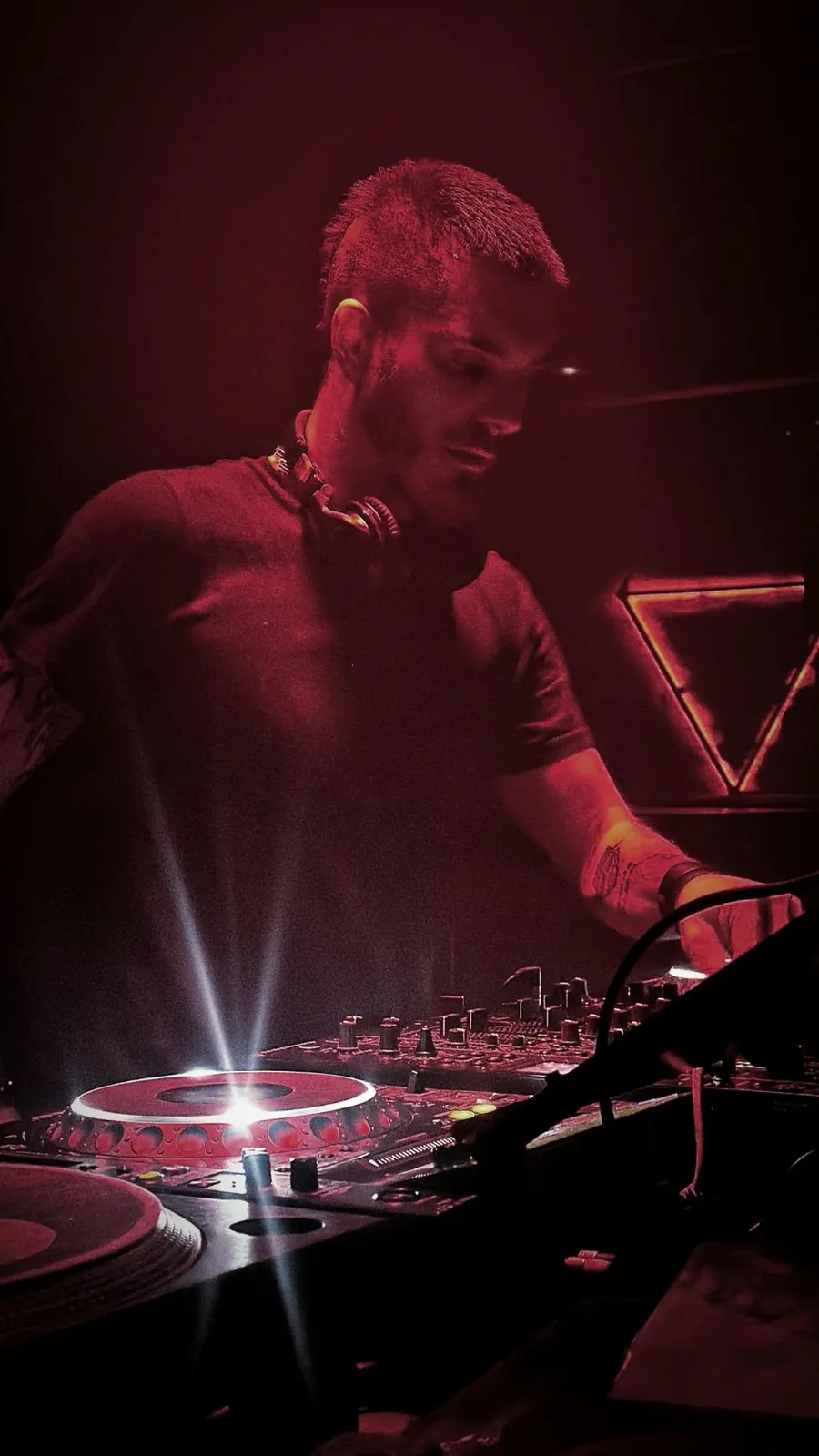
I play often at Depo, a club in Zagreb. HDS ZAMP later named my gig there on 2 May 2025 as the only received performance of my works in Croatia. For that night the club paid its regular flat fee, and HDS did not even ask the club for a list of the works performed. On my side there was concrete data about which music had been played. I wanted to know how that data enters the distribution.
In official correspondence I was told that for certain kinds of club programmes the fees are collected as a flat rate and, because processing individual uses is considered uneconomical, distributed within distribution class 330, General users.
And the key detail was this: according to HDS ZAMP, the distribution of that money is based on the programmes of radio and television stations.
In other words, the money is collected in the club and shared out according to what plays on radio and television.
That is where the question I consider the most important in the whole case came from: how well do radio and television programmes actually reflect the music performed in nightclubs?
Electronic music covers a huge number of subgenres, authors and independent releases that are used intensively in clubs and are almost absent from radio. As an example of a specialised electronic station, HDS named Enter Zagreb. But one such station does not answer the question of how representative the overall sample is of the real club scene.
I never claimed that flat rate collection is unlawful in itself. I had no basis for that. My question was simpler and, to me, more important: how can anyone check that money collected for the use of music reaches the authors whose works are actually used? And what happens when the author personally delivers a credible list of the works performed?
I have every one of my gigs written down by hand in a notebook, track by track. That data exists. The question was whether anyone would want to use it.
04
If you investigate a system, you have to investigate your own mistakes
Along the way I also found problems in my own registrations. Some titles had been registered with the suffix Original mix, some remix versions were not clearly distinguished, and for certain arrangements there were special rules about who may register them and under which conditions. HDS warned me about some of these problems.
That is important to admit. If I expect transparency from an institution, I have to hold myself to the same standard.
At one point there was a difference between 109 records in the HDS data export and 105 records visible on the portal. It would not have been responsible to conclude automatically that someone had deleted four works. But it was fair to ask for an explanation.
An incorrect registration can explain why a particular use was not linked to its author. It cannot explain the method used to distribute club royalties. So over time I separated two topics: the administrative accuracy of my catalogue, and the way the system in general records, checks and distributes money. Those two topics must not be mixed.
05
From questions to a written request
On 24 June 2026 I sent HDS ZAMP a detailed written request, with the State Intellectual Property Office in copy. I asked for data on registered works, recorded uses, tracklists, statements, any unidentified amounts, and the procedures an author can use to check whether their rights have been recorded correctly.
What followed was extensive correspondence and official replies. On 9 July I sent eleven more numbered questions.
06
First an offer, then the meeting
Before the meeting I got a phone call from HDS ZAMP. In that conversation I was told it would be good if I focused my energy on other things: on monetising my work through their channels, on the cooperation they have with the Ultra Europe festival, and on promoting domestic DJs.
It sounded like an offer. Maybe it was meant as one. But nobody in that conversation answered what I had asked.
On 29 July a meeting took place at HDS ZAMP. Several times, in different words, I asked the same question: if a club pays the fee but does not submit a tracklist, what mechanism connects that money with the authors whose works were actually performed? The answers kept going round the same circle: class 330, radio programmes, uneconomical processing. I was not given a regulation, an article, a calculation or the composition of the sample. When I mentioned the tracklists from thirty or so of my gigs, I was told, almost word for word: “Your tracks from the tracklists did not go into the calculation and you will not get any money for them.”
I did not come only to criticise. I also offered a solution: a limited pilot on a small number of agreed events, with structured digital tracklists confirmed by the DJ, the promoter and the club. The pilot would measure what processing real club programmes actually costs. If the problem is that it is uneconomical, let us measure it instead of assuming it. I had the impression they found the proposal laughable. At the meeting I got no substantive answer to it.
Part of the conversation again moved to cooperation, Ultra, domestic musicians and ways of earning more through their services.
First an offer to busy myself with something else, then a meeting where I felt my questions and my proposal were a joke and that nobody in the room took them seriously.
I do not claim there was any conditioning or pressure. I have no evidence of that, and I wrote exactly that to the Office the same day. But I record this circumstance, because the talk of cooperation and earnings took place precisely while my questions about distribution went unanswered.
07
The question that turned on me
That same day, 29 July, I filed a formal complaint and asked for written confirmation of the positions stated at the meeting. I separately sent the Office a factual note of the meeting.
Two days later the written reply from HDS ZAMP arrived. Along with some explanations, it contained one question for me: whether at my gigs I use original release sources or my own copied storage.
I read it as a question of whether I download music illegally. I had come to ask how money collected for music reaches its authors, and in the end I was the one who had to justify myself.
I answered the same day, completely openly: I do not use music from pirated or unauthorised sources, but my own masters, releases bought in official stores and promo material sent to me with permission by authors, labels and promo pools. And I asked whether this is a routine question for every DJ or a suspicion about me.
The answer only came on 3 September: asking the question does not mean claiming the music was obtained illegally. Along with a recommendation to buy a DJ licence in their webshop.
Asking where a DJ gets their music can be a legitimate question. But it was not an answer to what I had asked.
08
Complaint and petition
By then I was no longer just trying to find out why I could not see a particular royalty on my account. I was trying to understand the whole process, from registering a work and recording its use to distribution and a possible correction of the statement.
The case was recorded as a complaint under Article 75 of the HDS Distribution Rules, under number 17/25-2.
On 31 July I filed a consolidated petition with the State Intellectual Property Office. I did not ask for anyone to be declared responsible in advance. I asked for a check of the methodology, of how representative the data behind the distribution is, of the justification for calling individual processing uneconomical, and of the possibility of a correction when an author has data on actual use.
These are legitimate questions for any author who entrusts their rights to a collective management system.
09
An answer that did not answer the main question
On 3 September 2026 I received a detailed written statement from HDS ZAMP. It clarified many questions about registrations, titles, remixes, foreign uses and club programmes.
Some answers were not the ones an author hopes for, but they were answers. For several broadcasts on internet radio stations abroad, the foreign societies SOCAN, SACEM and PRS reported that they do not collect that data and that no royalty would be calculated. And Radio Split forwarded my list of the works played in the show to HDS, so HDS confirmed a later calculation and payment in the statement for the first half of 2026. When the tracklist of a DJ set exists and someone forwards it, the system can process it.
For clubs the answer was different, and clearer than ever. Money collected from a club is not linked to the works used in that club, nor traced to any individual author. If an author's works are not in the programmes of radio and television stations, the money from class 330 is not linked to that author. The same letter also says that a complaint about an unpaid use does not apply to works played in DJ sets in nightclubs.
To the argument that it would be uneconomical, the very reason I had proposed the pilot, HDS replied with a calculation. For a club paying 2,000 euros a year, one DJ gig would get about 12.67 euros, and one performed work, as they wrote, about 0.32 euros. That calculation also contains an arithmetic error: 12.67 euros divided by 60 uses is not 0.32 but about 0.21 euros.
The key question remained open. I did not get a verifiable picture of how faithfully the radio and television sample reflects the real use of music in clubs, and under what conditions an author's tracklist can change the result.
So that same evening I supplemented my petition, pointed the Office to that error as well, and explicitly asked for a supervisory review of the distribution model in class 330.
10
The Office opens an inspection
Things did not move by themselves at the Office either. A month after my petition I still did not know whether it had even been registered, so on 2 September I also wrote to the Croatian Government. Two days later the Office informed me that the petition was registered and under consideration.
On 14 September, in an extraordinary inspection opened ex officio on the basis of my petition, the Office ordered HDS by formal conclusion to respond within 15 days on every question relevant to the case and to deliver data and documentation. HDS responded on 2 October.
11
The decision
On 23 October 2026 the State Intellectual Property Office issued its decision in that inspection.
The Office found that HDS had not proven that the radio and television sample corresponds as closely as possible to the actual use of music in clubs. HDS had explained to the Office that the radio repertoire matches the club repertoire because both mostly use works that are “appealing and acceptable to a wider circle of listeners”. As for why club fees go into class 330, HDS said they had “always” been there and that no separate decision on it had ever been made. The Office concluded that general statements without documented data are not enough.
HDS therefore has three months from delivery of the decision to bring the distribution of club money for DJ resident programmes and for mechanical music into line: according to actual use, or, if that is not possible or would be clearly uneconomical, according to a sample it proves with verifiable data corresponds as closely as possible to actual use. It has to review DJ programmes and mechanical music separately. It has to amend its Distribution Rules, publish clear rules and deliver evidence to the Office, including an economic analysis with data. It has to set up a periodic review of the sample. Within six months it has to review every type of use distributed by sample. And it has to use complete data on the works actually used, when available, as the basis for distribution, or at least to check the sample.
The Office also wrote two sentences that mean more to me than anything else. First: the fact that clubs do not have reliable data does not rule out obtaining the data from DJs. Second: DJ performance lists, digital repertoire reporting and electronic processing of performance data could be introduced without significant cost increases, because HDS already has a highly developed IT base. That is, in essence, the pilot I offered in July.
121 days passed between my first detailed written request and that decision.
It is also important to say what the decision is not. It does not decide my individual royalty: my complaint 17/25-2 stays with HDS and is handled separately. Nor is it a finding that anyone took money from anyone, and the Office explicitly wrote that the sampling method is not unlawful in itself. The decision says something else, and to me something more important: a distribution method has to be proven, not assumed.
12
This was never only about my royalty
I could have looked at the whole situation purely through my own interest. Check my handful of broadcasts, correct my registrations and move on.
But the deeper I went, the clearer it became that this is not only about me. What about other independent producers? Authors whose tracks are played in clubs every week but rarely on the radio? DJs who can document what they played but cannot see what happened to that data? And how many authors even have the time, knowledge and nerves to keep asking questions like these for months?
I am not claiming that every author who did not receive a royalty has automatically been wronged. There are registration conditions, identification rules, different types of use, accounting periods and international agreements. That is exactly why the system has to be understandable. An author must be able to tell the difference between a case where no royalty arose and a case where the use was not recorded, not identified or not covered by the distribution method.
That is why this is not a story about me. It is for all the artists and producers who compose, release and perform while the system meant to protect them does not see their work. Not because the work is not there, but because nobody counts it. An author should not have to spend four months writing letters and go all the way to the state regulator to have their work recognised.
The decision now applies to every author whose music is played in clubs, not just to me.
And I think it is a big step forward for electronic music. The state regulator found that club money must not be shared out according to radio unless verifiable data proves that radio reflects what is played in the club, and that real data on the works performed has to be used when it is available, and can also be obtained from DJs. A scene that has lived in clubs rather than on the radio for decades now has grounds to become visible in the system that distributes money for its work too.
13
What now
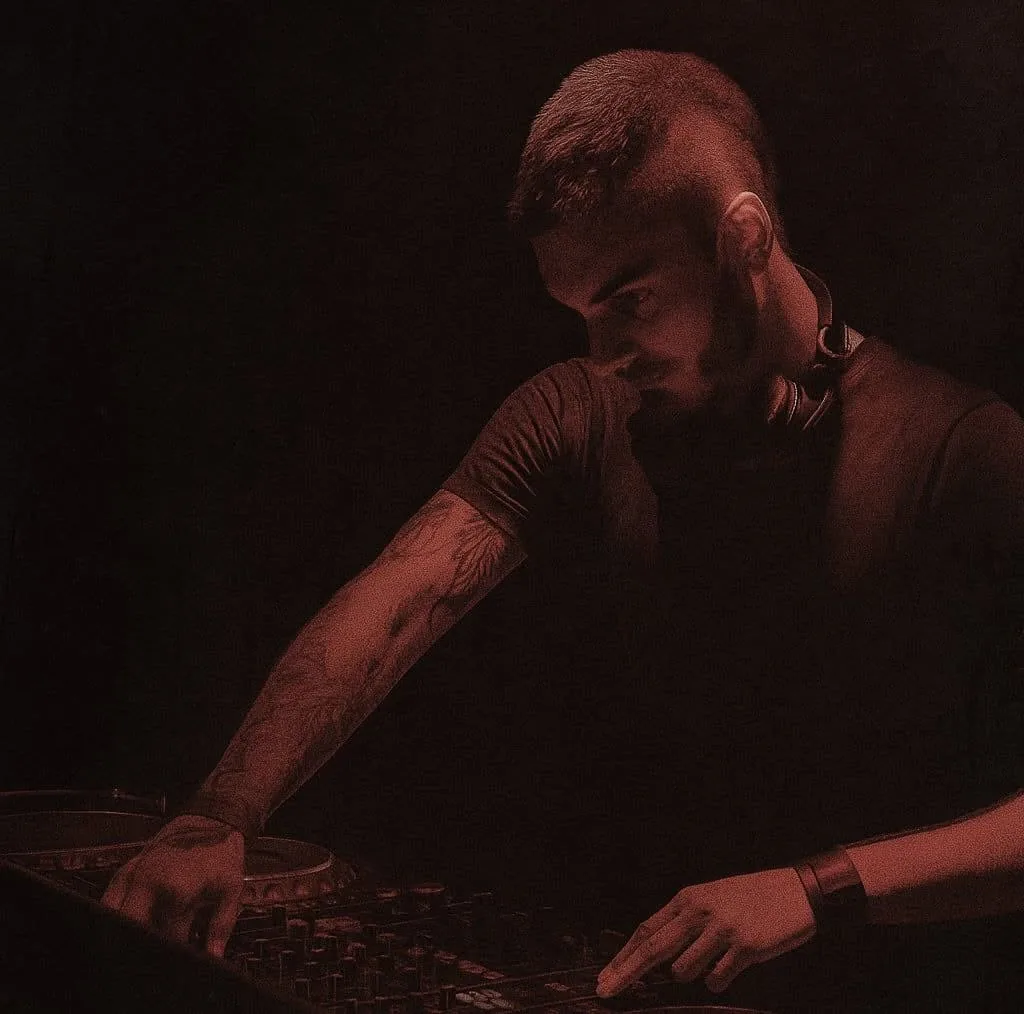
On 28 October I asked HDS to continue the procedure on my complaint and sent the pilot proposal again, this time worked out in detail. The data about tracks played in DJ sets already exists in the equipment DJs work with: Pioneer players log every track played, and rekordbox can export that list. It only needs to be collected, linked with ISRC and ISWC codes and delivered to HDS as a spreadsheet. Tracks that cannot be reliably identified would be flagged separately, not guessed.
The same proposal I offered in July, only now with the regulator's decision behind it.
I am moving the tracklists from my notebook into a spreadsheet, gig by gig, so that HDS has real data instead of an estimate.
And to fellow DJs and producers I have just one message: write down your tracklists and submit them. If the system now has to use real data when it is available, then it is up to us to make our tracklists available.
14
I was not looking for a fight. I was looking for answers.
Through this process I learned far more about collective rights management than I ever planned to. How important it is to register a work correctly, how different versions can complicate identification, and why a technical record of a broadcast is not enough for an automatic payment.
I also learned how hard it is for an independent author to reconstruct the path of their own work through an administrative and accounting system.
I cannot and do not want to claim that anyone stole my money. I have no evidence for such a claim. Nor am I claiming that every distribution method is unlawful.
Today the music industry has technology that recognises a track in a fraction of a second and links authors to their works around the world. At the same time, parts of collective distribution still rely on models built on indirect data, samples and estimates. Such models can have a practical justification. But a justification is not the same as proof that the model fairly reflects actual use. And now I am not the only one saying that.
I am not asking for special treatment. I am not asking to be paid anything I have no right to. I am asking for a clear, documented and verifiable way for an author to find out what happened to their work, why a use was not paid, and whether the mistake can be corrected.
Behind every track there is someone's work. Behind every release there are hours, days and months of creating. Behind every independent producer there are often years of investment with no certainty that the work will ever pay back. When that music finds its way to an audience, copyright should not become one more place where an author cannot find out what they are owed.
So my story with HDS ZAMP did not end with the question of how much money I made. It ended, at least for now, with an answer that matters more than any royalty of mine: a system that manages authors' rights must be able to show how it does it. Now that is also written in a decision of the state regulator.
Until that happens in practice too, I will keep asking. And keep writing down tracklists.
Dino Egredžija
DKTech | Music producer and DJ
Signal
Signal
In this issue
Newsletter
New releases, SIGNAL issues, events and LAB drops, by email.