
SIGNAL VOICESSIGNAL 008
UMEK The Archive, the Room and the Algorithm
Cutting the Gatex master tape, recovering music from dying DATs, reading a dancefloor without surrendering the set, and asking an AI version of himself what UMEK would do.

Signal 008
UMEK’s archive is no longer abstract history. For the 25th anniversary of Gatex, he physically cut the original DAT master and distributed fragments of it with the record. That gesture opens a conversation that keeps returning to the same tension: what should be preserved, what should disappear, and what becomes more valuable because it cannot be repeated.
From fragile DATs and revived labels to crowd reading, unreleased IDs, artist development and Viberate, UMEK moves between instinct and systems without treating them as opposites. By the end, he is describing an AI agent built around his own history and asking it what UMEK would do. The interesting question is not whether technology has entered the process. It is which parts of an artist remain impossible to reduce to data.
01
A master tape becomes the edition.
For the 25th anniversary of Gatex, you went back to the original DAT masters and turned part of that physical archive into the release itself. What made you want the history of the record to become part of the object people receive today?
I wanted to do something really special. At the same time, all the usual ideas with vinyl, different colors, signed copies, special limited editions, have already been done so many times.
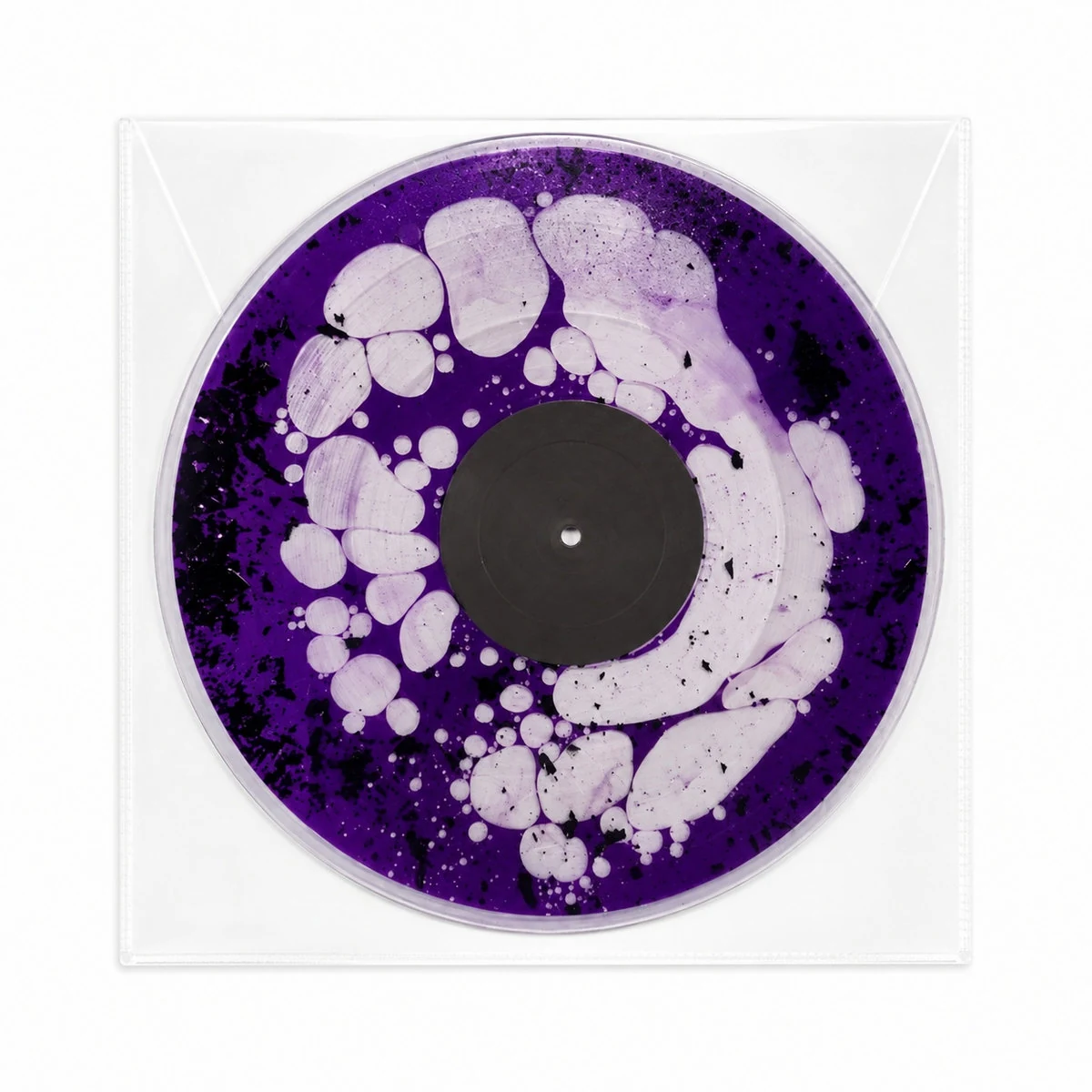
So I started thinking about what I could actually add to the record to make it genuinely unique, especially since the vinyl itself is filled with liquid. Then I came up with the idea: why not cut up the original DAT tape and include pieces of it with the records? And that's basically how the idea was born.
I have to tell you, I was really nervous when I was actually cutting the DAT tape. This is a piece of history that has been with me for so many years, so taking scissors to it felt kind of crazy.
But now small pieces of that original master tape are with collectors and with people who have supported my music. And I think they deserve to have something like that. They're not just getting another copy of Gatex; they're getting an actual physical piece of its history.
This is a piece of history that has been with me for so many years, so taking scissors to it felt kind of crazy.
02
The archive has a deadline.
You are opening parts of your DAT archive now and releasing music that remained unheard for decades. When you listen to those tracks today, what makes you decide that one still deserves a release while another should remain in the archive?
It was time to do it, probably the last possible time, actually, because DATs are very fragile. A lot of the DAT cassettes didn't work anymore, and I especially had problems finding DAT players that could read them properly.
I borrowed three different machines before I finally found one that worked. Even then, some of the tracks had dropouts, so unfortunately there is music there that will probably never be retrieved.
But with the tracks I managed to save, I decided: why not release them? I started putting them on my Bandcamp because I think that's the perfect place for something like this. Bandcamp is still mine, it feels very direct and exclusive, and I want to keep it that way.
But I can also tell you that some of those tracks from the old days will be released on vinyl. I'm already talking to a really cool label about releasing some of them.
So when it comes to deciding whether something should stay on a DAT forever or whether I should release it and maybe make some people happy, I decided to make people happy. Why not?
And all these DAT tracks are downloadable for free on my Bandcamp. The latest ten tracks are always available as free downloads, so hurry up and get them. Who knows? Maybe one day I'll change my mind and remove them completely.
You never know with me. [Laughs]
03
Different music needs different rooms.
You brought Polyvinyl back and also created 1605 GrooveSector instead of placing everything under the main UMEK and 1605 identity. What does having those separate spaces allow you to do that the main label cannot?
I'm also bringing back Consumer Recreation. The reason I use different brands and labels is actually quite simple: the music is different.
For the last couple of years, 1605 has been very focused on peak-time techno. I still release that kind of music on 1605, including music I've been playing over the last few years, but my personal taste has changed as well.
So I thought it would only be fair to create another space for the music I'm into now. You can still see the connection to 1605 in 1605 Groove Sector, obviously, but Groove Sector represents a different direction. The style is completely different.
That's really the main reason for separating them. If I released everything under one label, I think people would eventually become confused about what they're going to get from it.
I like the idea that each label has its own identity. When you see the name, you should have some idea of the musical world you're entering.
04
An ID removes the name from the test.
You tested Last Bow for months before revealing what the record was. When people react without knowing the name behind a track, does that give you a different kind of information than the reaction after they know it is yours?
Obviously, when you test a track and people don't know what it is, it's completely about the music. That's the beauty of IDs.
Okay, nowadays when there's an ID in my set, there's probably a 95 percent chance that it's mine. [Laughs] But still, when you play something and nobody really knows what it is, they're hearing it for the first time without any expectations attached to it.
And the reaction to this one was really great. People loved it. By now, a lot of people are waiting for the release because I've been teasing it for quite a while, and I think it's finally time to put it out.
The official release date is October 30, and I'm really curious to see what happens.
There's this meme going around with DJs asking, “Do you want this to be released?” and I was kind of making fun of us DJs for doing that. But in this case, so many people genuinely asked me about the track. I wouldn't be exaggerating if I said at least a hundred people asked me what it was, and honestly, I think it was probably more than that.
So people really are expecting this record.
The vinyl pre-sales are also looking really good. The first batch will be released as a limited silver vinyl edition, and after that it will be available on standard black vinyl.
So if you want the silver one, get your copy while you can. The first batch is limited and the silver looks really beautiful.
it's completely about the music. That's the beauty of IDs.
05
Reading the room without surrendering the set.
You have spoken about reading and directing the energy of a room, while also maintaining a strong musical direction of your own. How do you recognize the moment when the crowd should influence your next decision and when you should trust your original plan?
For me, reading the crowd is more about what I'm going to do within my playlist. It's actually quite a narrow thing.
Let's say I have a hundred tracks prepared. If I feel that the music is a little too hard for the crowd, I might go slightly softer, but still within the range of music I'm comfortable playing and within what I've prepared.
That can happen, but honestly, it happens very rarely.
I'm an old-school DJ in that sense, and I have a strong belief that people came to hear my choice of music, not just the hits they're expecting. I'm not a radio DJ. I don't play a selection of big radio songs that everyone already knows.
So in 99 percent of cases, I'm not going to completely change what I'm doing. I am who I am.
When I talk about reading the crowd, I'm talking much more about the dynamics of the set. When am I going to push the energy up? When am I going to play those next three big tracks? When should I hold back a little? How should I structure the next part of the mix?
That's the philosophy I'm talking about when I say I'm reading the crowd.
It's not like I have some secret emergency folder and, if my music isn't working, suddenly I switch to something completely different. If absolutely nothing I'm playing works, then I'm probably in the wrong place, or maybe the promoter booked the wrong DJ. [Laughs]

06
Distance is another production tool.
You have described finishing a track, stepping away from it, and returning with fresh ears before making the final decision. What do you tend to notice after that distance that is almost impossible to hear while you are still excited about the track?
It can be something as basic as the choice of sounds. A lot of the time I'll come back and think, “Okay, maybe I chose the wrong kick.” Maybe the overall sound is too dark. Maybe certain elements aren't actually as exciting as I thought they were when I was making the track.
It's very easy to fall into a loop when you're producing. You hear something again and again, and after a while you lose perspective. When you come back later, you might realize that another sound would work much better.
Back in the day, I didn't work like that. I would make the track, mix it, finish it and that was it. There was no backup version, no going back after a week. You captured the moment and moved on.
And with that approach came imperfections.
Some imperfections can be really interesting. They can give a record character. But in many cases, the imperfections simply meant that the mix didn't sound as good as it could have.
So I'm really happy that today I can finish something, leave it alone for a week and then come back with fresh ears, some distance and a little bit more objectivity, if we can even talk about being objective about your own music. Let's call it my version of objectivity.
That distance allows me to hear things I couldn't hear while I was emotionally involved in making the track. Then I can change those things and hopefully make the record even better.
07
Some events should disappear.
When the Symphonic project reduced a much larger selection of your catalogue to a small number of pieces, did the process reveal anything surprising about which parts of your music can exist outside the physical environment of a club?
Honestly, I was surprised by the whole experience. The crowd was amazing, the experience itself was really special, and I loved every moment of it.
It was a huge amount of work to make it happen, but I'm really happy that I did it.
We didn't record it, and I'm actually completely fine with that. With the parties I do here in Slovenia once a year, I want to create something really special, something outside the box that you have to experience in person. If you weren't there, you missed it for all eternity.
And I actually love that idea.
At the same time, I'm a little tired of this idea that everything has to be recorded and everything has to be documented. I know how contradictory that sounds because I record my own sets. I record parts of my performances because I need content to promote my DJing. That's simply the world we're living in right now.
But that's also why I love being able to hide from that world once a year and create these crazy, big projects that won't repeat themselves and that only exist in that moment.
You have one day. Come and experience it. If you miss it, there isn't going to be a second opportunity.
If even one or two percent of my gigs can be projects like that, I'm really happy. They are special precisely because they're temporary. You have to be there.
People are a little spoiled these days because we're used to having access to everything afterwards. Sometimes I think there should still be things where you have to sacrifice your time, make the effort, show up and actually be present.
If you weren't there, you missed it for all eternity.
08
History repeats itself.
In 2024 you expected techno to move toward slower tempos and new combinations of styles. Looking at where the scene is now, what part of that development has surprised you the most?
Actually, it hasn't surprised me. The shift I was expecting is happening right now.
You can see groove becoming more popular again, and the tempo is starting to come down. I'm not saying groove is slow, because it's definitely not, it's still quite fast. But compared to the really hard, fast, heavy and distorted music we've had, it feels like a breath of fresh air.
I'm also hearing music becoming less saturated with sounds. It's moving towards something more minimal, not minimal techno necessarily, but more minimalistic in the sense that there are fewer elements and fewer channels fighting for space.
That's actually where I predicted things would go, so I'm not particularly surprised by it.
I've been around for such a long time that I've seen these cycles happen again and again. Music moves in waves. Energy increases, tempos become faster, everything becomes harder, and eventually it starts moving in the opposite direction.
At this point, it's almost easy to predict. When there's an era of really slow music, eventually things will speed up. When everything becomes extremely fast, eventually people start slowing it down again.
At the same time, it's funny to see some melodic house DJs becoming melodic techno DJs and speeding things up by a few BPM. But that's also completely logical.
People get bored. I get bored of certain things too. If I had been playing very slow for years, I would probably want to speed things up. If I had been playing extremely fast for years, I'd probably want to slow down.
That's just how it works. I've seen it happen so many times.
History repeats itself.
09
Developing artists means learning to lose them.
1605 has historically introduced producers who were still relatively unknown, while the expectations around becoming an artist today extend far beyond producing and DJing. When you hear an exceptional record from someone with almost no profile around it, how much can the music itself still decide what happens next?
If I look at 1605 right now, especially within peak-time techno, in some ways it has almost become a scouting label, a place where artists can make a step before moving on to something bigger.
There's one of the biggest peak-time techno labels right now that recently did a compilation, and three of the artists on it had previously released on 1605.
But I want to be very clear about something: I'm not saying I discovered those artists. They were releasing on smaller labels before 1605 as well. They were already doing the work. They made really good music and really good productions, and that's why I noticed them.
Running my Patreon has also introduced me to a lot of lesser-known artists, which means I sometimes get to hear them very early. And that's something I really enjoy. I like digging. I like discovering fresh music and seeing somebody at the beginning of their development.
At the same time, let me be honest: it can also be frustrating.
Sometimes you find a very small artist and you start developing them. You give them a good release, a strong position and an opportunity. Luckily, because of the history of 1605, we have great support from Beatport and relationships across the industry, so we can give a new artist a platform and some visibility.
And then, in many cases, the second they get an opportunity to move to a bigger label, they go.
Sometimes you're sitting there thinking, “Where's the love?” [Laughs]
But I'm saying that with a smile. I don't want anyone to interpret this as me criticizing or bad-mouthing artists for doing it. That's simply how the business works.
And I did exactly the same thing during my own career, so I would be a huge hypocrite if I said I didn't understand it. I absolutely understand it.
You make a step, then you get an opportunity to make a bigger step, and of course you take it. Then maybe that bigger label helps you grow, you become successful enough to start your own label, and eventually you leave that label too.
That's the cycle.
Understanding it, however, doesn't mean it doesn't hurt sometimes. When you spend a lot of time developing an artist and the label also invests money into building that artist, of course you become emotionally invested. And when they immediately move on to something else, it can hurt.
My wife always tells me that I get too personally attached to the artists I work with. Maybe that's something I should improve.
But I'm 50 years old now. I doubt I'm going to change. [Laughs]
So it is what it is. We move on.
And as we're speaking, I've just signed some really cool music from new, unknown artists. Hopefully, with the platform I have, I can give them a little recognition and help push their careers forward.
Understanding it, however, doesn't mean it doesn't hurt sometimes.
10
What the data still cannot explain.
Through Viberate you have worked on making parts of the music industry measurable, while your career as a DJ has always depended heavily on instinct and reading people in real time. What is the most important thing about an artist that you still cannot understand from data?
Viberate was actually created because the people I started it with, my partners and co-founders, had previously been my managers. We were working in the music business, and so much of the industry was based on word of mouth. There were so many things you simply couldn't measure.
And I know how stupid it can sound when you say, “We're going to measure art.”
At the same time, I kind of hate it when something can't be measured. Do you see the dilemma? [Laughs]
For example, I would love to have an app that could measure a DJ mix and tell me exactly how well it was technically executed. And I guess one day that might actually be possible, let's never say never.
With enough data, maybe eventually you can measure almost everything.
Technically, you could probably already build something that analyzes transitions and tells you exactly how many milliseconds one kick deviates from another. You could measure certain technical skills very precisely.
But that still wouldn't give you the whole picture.
You can measure the technical side, but the story behind something is much harder to measure. That's the difference I'm talking about.
And things are moving incredibly quickly now. Viberate is a really cool product because you can connect its MCP to your AI. In the past, all these different music-industry data services could be really difficult to read and interpret. You had all these charts and numbers, but understanding what they actually meant for you as an artist wasn't always straightforward.
Now, with Viberate's MCP, you can basically have a translator between the data and yourself. AI can read those charts for you, interpret what's happening and give you pointers based on the information.
I think that's beautiful. Honestly, I love it. Without data, making certain decisions can be a pain in the ass.
I've even made my own UMEK AI agent that I talk to. When I'm considering certain decisions and I'm not sure about them, I ask it. Sometimes it basically tells me, “No, UMEK would never do that.”
Which is hilarious, because I'm UMEK and I'm asking an AI version of UMEK what UMEK would do. [Laughs]
But now I have this little partner in crime that I can talk to. If I'm thinking about doing something that doesn't really fit my style or the way I've historically approached things, it can remind me of that.
We're living in crazy times, but I think it's absolutely beautiful.
I'm really excited to see what the future brings.
I'm UMEK and I'm asking an AI version of UMEK what UMEK would do.
Signal 008
Instinct survives the system.
The conversation starts with an archive that is physically deteriorating and ends with an artificial version of UMEK built from data. Between those two points is the part that neither medium fully captures: judgment.
A DAT can preserve a recording. Data can describe patterns. An AI agent can remind an artist how he has behaved before. None of them decides when to push a room, when a mistake gives a record character, when an unknown producer deserves investment, or when an experience should be allowed to disappear.
That is the useful tension running through UMEK’s answers: preservation without nostalgia, measurement without surrendering instinct, and technology without pretending that the story behind the music has become measurable.